

Introduction
IoT parking solutions are transforming the way cities and businesses manage parking spaces. With the rapid increase in urban population and vehicles, traditional parking systems are no longer efficient. Drivers often waste time searching for available spots, which leads to traffic congestion, fuel waste, and frustration.
Internet of Things (IoT) technology offers a smart and connected approach to parking management. By using sensors, mobile apps, cloud systems, and real-time data, IoT parking solutions make parking faster, easier, and more efficient. This technology is becoming a key part of smart cities worldwide.
1. What Are IoT Parking Solutions?
IoT parking solutions refer to smart systems that use connected devices and sensors to monitor, manage, and optimize parking spaces in real time.
These systems typically include:
- Parking sensors installed in parking spots
- Cloud-based management software
- Mobile applications for users
- Real-time data analytics systems
The main goal is to provide live information about available parking spaces and automate the entire parking process.
2. How IoT Parking Systems Work
IoT parking systems operate through a combination of hardware and software components that work together seamlessly.
Step-by-step process:
- Sensors Detect Vehicles:
Ground or overhead sensors detect whether a parking spot is occupied or free. - Data Transmission:
The sensor sends data to a cloud server using wireless communication (Wi-Fi, LoRaWAN, or cellular networks). - Real-Time Processing:
The system processes data and updates availability instantly. - User Access via App:
Drivers use mobile apps to check available parking spots nearby. - Navigation & Booking:
Some systems allow users to reserve a spot in advance and navigate directly to it.
This automation reduces human effort and increases parking efficiency.
3. Key Benefits of IoT Parking Solutions

IoT parking technology provides several advantages for cities, businesses, and drivers.
1. Reduced Traffic Congestion
Drivers spend less time searching for parking, which reduces road traffic.
2. Time Efficiency
Real-time updates help users quickly find available parking spots.
3. Fuel Savings
Less driving in circles means reduced fuel consumption.
4. Better Space Utilization
Parking areas are used more efficiently with optimized management.
5. Enhanced User Experience
Mobile apps and automated systems make parking simple and stress-free.
6. Revenue Generation
Smart pricing models help parking operators increase revenue through dynamic pricing.
4. Types of IoT Parking Solutions
There are different types of IoT-based parking systems used in modern infrastructure.
1. On-Street Smart Parking
These systems are used on public roads and detect available street parking spaces.
2. Off-Street Parking Systems
Used in malls, offices, airports, and commercial buildings to manage large parking lots.
3. Smart Parking Meters
These meters are connected to the internet and allow digital payments and monitoring.
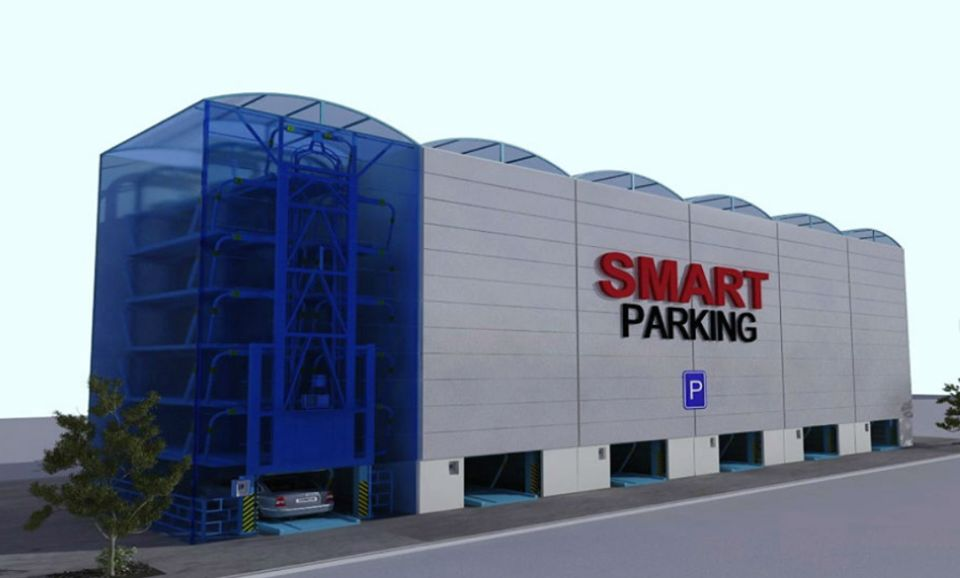
4. Automated Parking Systems
Fully automated systems that park and retrieve vehicles with minimal human involvement.
5. Sensor-Based Parking Guidance Systems
These systems guide drivers to available spaces using digital signs and mobile apps.
5. Future of IoT in Parking Industry
The future of IoT parking solutions is highly promising as smart cities continue to expand.
Key future trends include:
- AI Integration: Artificial intelligence will predict parking demand patterns.
- 5G Connectivity: Faster communication for real-time updates.
- Autonomous Vehicles: Self-driving cars will automatically find and park spots.
- Blockchain Payments: Secure and transparent parking transactions.
- Smart City Integration: Parking systems will connect with traffic lights and public transport systems.
These advancements will make urban transportation more efficient and sustainable.
Challenges in IoT Parking Solutions
Despite its benefits, IoT parking also faces some challenges:
- High installation cost of sensors and infrastructure
- Data privacy and security concerns
- Maintenance of hardware systems
- Dependence on internet connectivity
- Integration with existing old parking systems
However, continuous innovation is reducing these limitations over time.
Real-World Applications
IoT parking solutions are already being used in many places:
- Shopping malls for efficient customer parking
- Airports for managing high vehicle volume
- Smart cities for reducing urban congestion
- Corporate offices for employee parking management
- Hospitals for emergency and visitor parking optimization
Conclusion
IoT parking solutions are revolutionizing urban mobility by making parking smarter, faster, and more efficient. With real-time monitoring, automation, and data-driven insights, these systems solve one of the biggest challenges in modern cities. As technology advances, IoT parking will become an essential part of every smart city infrastructure.
FAQs
What is IoT parking technology?
IoT parking technology uses sensors and connected systems to monitor and manage parking spaces in real time.
How does smart parking reduce traffic?
It reduces traffic by guiding drivers directly to available parking spots, minimizing search time.
Is IoT parking expensive to install?
Initial setup can be costly, but long-term benefits and efficiency make it cost-effective.
Can IoT parking systems be used in small cities?
Yes, they can be scaled for both small towns and large metropolitan areas.
Do IoT parking systems require internet?
Yes, most systems rely on internet connectivity to transmit and process real-time data.
